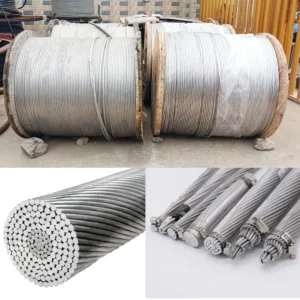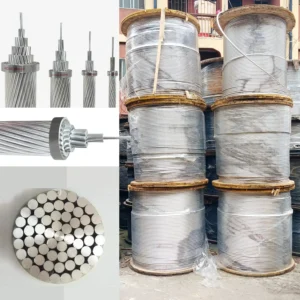
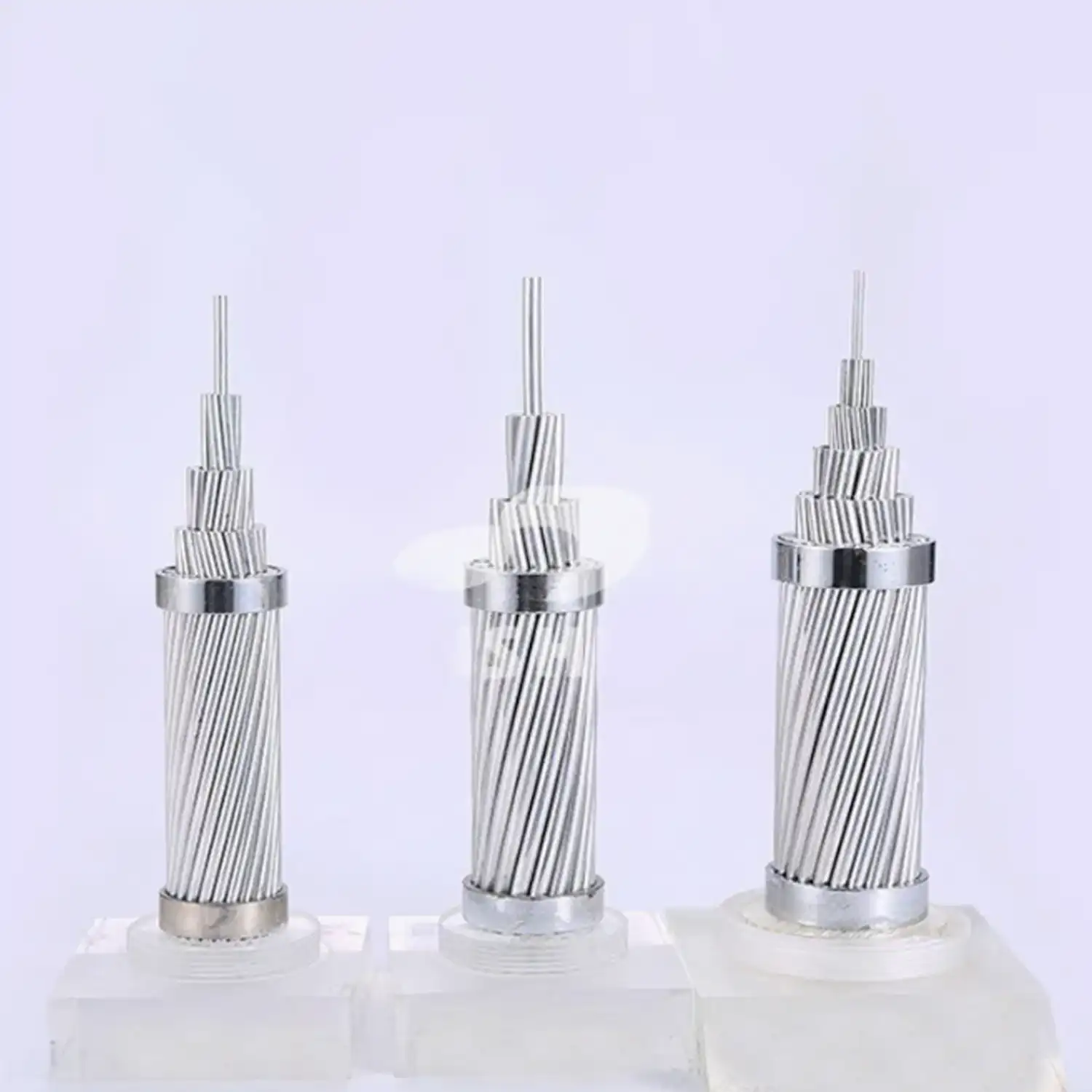
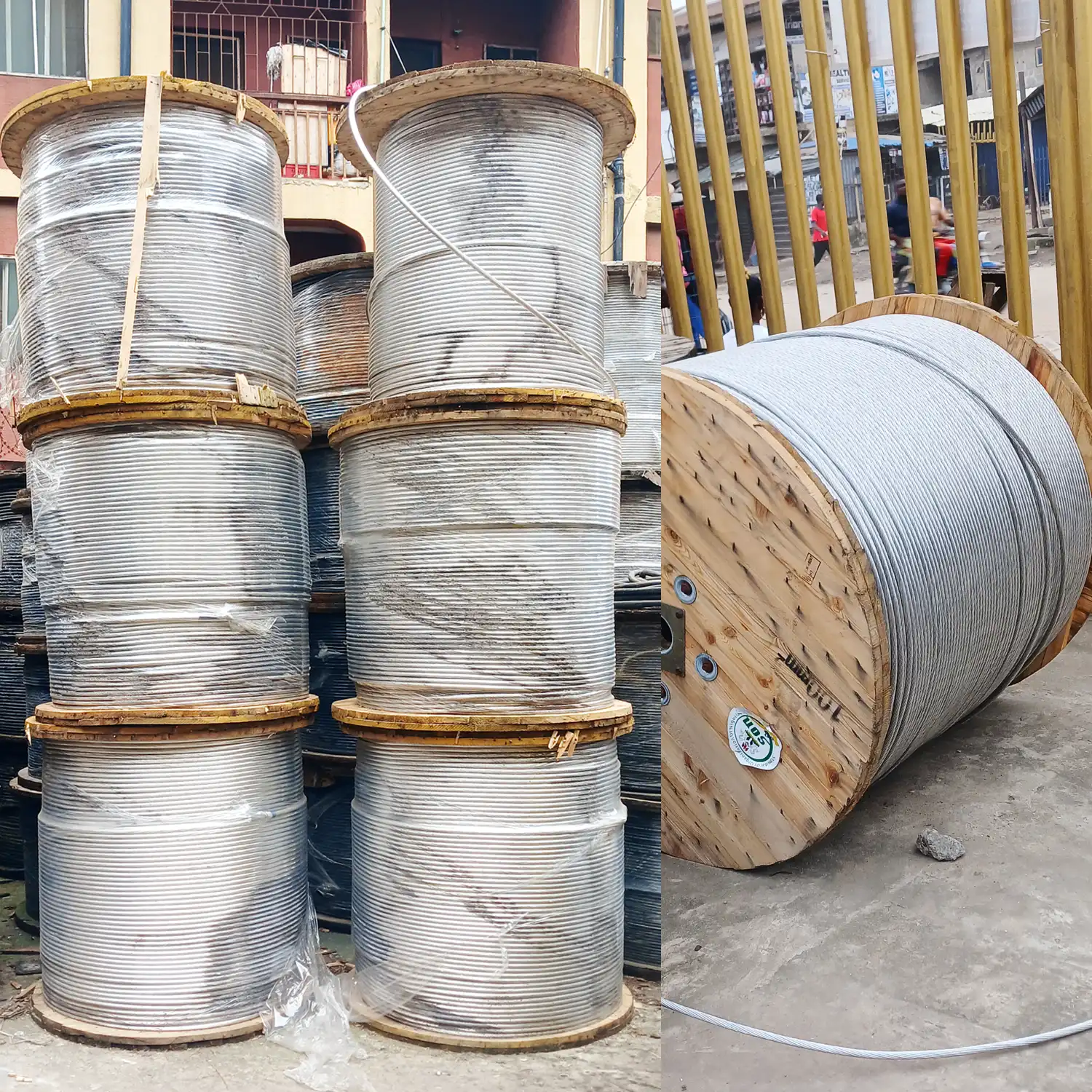
Aluminium Cable AAC AAAC ACSR Conductor Overhead Line Wire – 35mm², 50mm², 70mm², 120mm² & 150mm²
Aluminium AAC AAAC ACSR Conductor Overhead Line Wire is a high-quality aluminium conductor designed for reliable overhead power transmission and distribution. Available in 35mm², 50mm², 70mm², 120mm² and 150mm², it is suitable for electrical utility networks, industrial power distribution, rural electrification and infrastructure projects.
Available Sizes: 35mm² | 50mm² | 70mm² | 120mm² | 150mm²
Types: AAC | AAAC | ACSR
Applications: Overhead Power Lines, Transmission, Distribution & Industrial Electrical Projects.
- Delivered today (order Mon-Fri before 12:00, delivery between 17:00 and 22:00)
- Including shipping costs, sent by klbtheme.com
- Pick up at a klbtheme.com collection point is possible
- 30 days to change your mind and free returns
- Day and night customer service
Description
Aluminium Cable AAC AAAC ACSR Conductor Overhead Line Wire – 35mm², 50mm², 70mm², 120mm² & 150mm²
Aluminium overhead conductors are widely used for electrical power transmission and distribution because they combine good electrical conductivity with low weight, making them suitable for overhead power-line installations. AAC, AAAC and ACSR conductors are commonly selected for utility networks, industrial power distribution, rural electrification, and electrical infrastructure projects.
C.DIVINE aluminium conductor solutions are available in popular sizes including 35mm², 50mm², 70mm², 120mm² and 150mm², providing options for different overhead line applications and electrical load requirements.
Whether you are sourcing aluminium cable for a new power distribution project, replacing existing overhead conductors, or supplying electrical materials for a construction project, selecting the correct conductor type and cross-sectional area is essential.
Available Aluminium Overhead Cable Sizes
| Conductor Size | Common Conductor Type | Typical Application |
|---|---|---|
| 35mm² | AAC / AAAC / ACSR | Distribution and overhead feeder lines |
| 50mm² | AAC / AAAC / ACSR | LV/MV distribution applications |
| 70mm² | AAC / AAAC / ACSR | Utility and industrial distribution |
| 120mm² | AAC / AAAC / ACSR | Higher-capacity overhead lines |
| 150mm² | AAC / AAAC / ACSR | High-load distribution and transmission applications |
Actual current-carrying capacity, construction, strand configuration and suitable voltage level depend on the exact conductor specification and installation conditions.
What Is AAC Aluminium Conductor?
AAC means All Aluminium Conductor. It is manufactured using aluminium strands without a steel reinforcing core.
AAC conductors are valued for their relatively high conductivity-to-weight ratio and are commonly used where spans and mechanical loading requirements are moderate.
Typical applications include:
- Urban electrical distribution
- Short and medium overhead spans
- Distribution feeders
- Substations
- Electrical utility networks
- Industrial power distribution
What Is AAAC Aluminium Conductor?
AAAC means All Aluminium Alloy Conductor. It uses aluminium alloy strands designed to provide improved mechanical properties compared with conventional AAC.
AAAC can be advantageous where higher mechanical strength, corrosion resistance and suitable electrical performance are required.
Common applications include:
- Overhead distribution networks
- Medium-voltage power lines
- Long-span distribution
- Coastal and corrosive environments
- Industrial electrical networks
- Utility infrastructure
What Is ACSR Conductor?
ACSR means Aluminium Conductor Steel Reinforced. It combines aluminium strands with a galvanized steel core.
The aluminium provides electrical conductivity while the steel core provides additional mechanical strength. This construction makes ACSR particularly useful for overhead lines requiring greater tensile strength and longer spans.
ACSR is commonly used for:
- High-voltage overhead transmission
- Medium-voltage distribution
- Long-distance power lines
- Utility transmission networks
- Industrial power infrastructure
- Long-span overhead installations

Bare Conductor Types
(1) all aluminum conductor (AAC)
AAC used in overhead electric power transmission and distribution lines with various grade voltages.
Mainly used in urban areas for electricity transfer where the spacing is short and the supports are closer together. Apart
from that, these conductors are also extensively used in coastal area because of their corrosion resistance properties
(2) all aluminum alloy conductor(AAAC)
The aluminum alloy conductors are used in replace of single-layer ACSR conductors to reduce power
loss in overhead distribution and transmission lines, when replacing the aluminum conductor steel reinforced , the AAAC
can save 5-8% of the construction cost.
(3) aluminum conductor steel reinforced (ACSR)
Used as bare overhead transmission conductor and as primary and secondary distribution conductor
and messenger support. ACSR offers optimal strength for line design. Variable steel core stranding enables desired strength
to be achieved without sacrificing ampacity.
(4)aluminum conductor aluminum alloy reinforced(ACAR)

Execute Standards
(1). ASTM B 232/B 232M:Concentric-Lay-Stranded Aluminum Conductors, Coated-Steel Reinforced (ACSR)
(2). AS 3607:Conductors-Bare overhead, aluminium and aluminium alloy-Steel reinforced
(3). IEC 61089:Round wire concentric lay overhead electrical conductors
(4). DIN 48.204:Steel reinforced aluminium stranded conductor
(5). BS 215-2:Aluminium conductors and aluminium conductors, steel-reinforced-For overhead power transmission-Part 2:Aluminium conductors, steel-reinforced
(6). BS EN 50182:Conductors for overhead lines-Round wire concentric lay stranded conductors
(7). Production can be arranged according to customers requirements’ for material standard, etc.
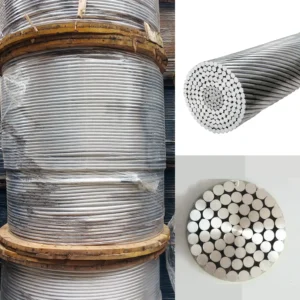
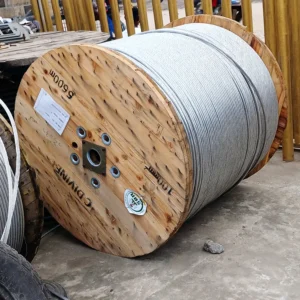
Cable picture


ASTM B232 Standard:
| Code Name | Size | No./Dia.of Stranding Wires | Approx. Overall Dia. | Approx. Weight | Code Name | Size | No./Dia.of Stranding Wires | Approx. Overall Dia. | Approx. Weight | ||
| AWG or MGM | Alum. | ST. | AWG or MGM | Alum. | ST. | ||||||
| No./mm | No./mm | mm | kg/km | No./mm | No./mm | mm | kg/km | ||||
| Swanate | 4 | 7/1.96 | 1/2.61 | 6.53 | 93 | Tern | 795 | 45/3.38 | 7/2.25 | 27.03 | 1300 |
| Sparrow | 2 | 6/2.67 | 1/2.67 | 8.01 | 129 | Condor | 795 | 54/3.08 | 7/3.08 | 27.72 | 1461 |
| Sparate | 2 | 7/2.47 | 1/3.30 | 8.24 | 148 | Cuckoo | 795 | 24/4.62 | 7/3.08 | 27.74 | 1461 |
| Robin | 1 | 6/3.00 | 1/3.00 | 9.00 | 163 | Drake | 795 | 26/4.44 | 7/3.45 | 28.11 | 1550 |
| Raven | 1/0 | 6/3.37 | 1/3.37 | 10.11 | 206 | Coot | 795 | 36/3.77 | 1/3.77 | 26.41 | 1184 |
| Quail | 2/0 | 6/3.78 | 1/3.78 | 11.34 | 259 | Mallard | 795 | 30/4.14 | 19/2.48 | 28.96 | 1728 |
| Pigeon | 3/0 | 6/4.25 | 1/4.25 | 12.75 | 327 | Ruddy | 900 | 45/3.59 | 7/2.40 | 28.73 | 1472 |
| Penguin | 4/0 | 6/4.77 | 1/4.77 | 14.31 | 412 | Canary | 900 | 54/3.28 | 7/3.28 | 29.52 | 1554 |
| Waxwing | 266.8 | 18/3.09 | 1/3.09 | 15.45 | 422 | Rail | 954 | 45/3.70 | 7/2.47 | 29.61 | 1560 |
| Merlin | 336.4 | 18/3.47 | 1/3.47 | 17.35 | 532 | Catbird | 954 | 36/4.14 | 1/4.14 | 28.95 | 1421 |
| Linnet | 336.4 | 26/2.89 | 7/2.25 | 18.31 | 656 | Cardinal | 954 | 54/3.38 | 7/3.38 | 30.42 | 1753 |
| Oriole | 336.4 | 30/2.69 | 7/2.69 | 18.83 | 737 | Ortlan | 1033.5 | 45/3.85 | 7/2.57 | 30.81 | 1690 |
| Chickadee | 397.5 | 18/3.77 | 1/3.77 | 18.85 | 629 | Tanager | 1033.5 | 36/4.30 | 1/4.30 | 30.12 | 1539 |
| Ibis | 397.5 | 26/3.14 | 7/2.44 | 19.88 | 775 | Curlew | 1033.5 | 54/3.52 | 7/3.52 | 31.66 | 1900 |
| Lark | 397.5 | 30/2.92 | 7/2.92 | 20.44 | 871 | Bluejay | 1113 | 45/4.00 | 7/2.66 | 31.86 | 1821 |
| Pelican | 477 | 18/4.14 | 1/4.14 | 20.70 | 754 | Bunting | 1192.5 | 45/4.14 | 7/2.76 | 33.12 | 1949 |
| Flicker | 477 | 24/3.58 | 7/2.39 | 21.49 | 877 | Grackle | 1192.5 | 54/3.77 | 19/2.27 | 33.97 | 2190 |
| Hawk | 477 | 26/3.44 | 7/2.67 | 21.80 | 931 | Bittern | 1272 | 45/4.27 | 7/2.85 | 34.17 | 2080 |
| Hen | 477 | 30/3.20 | 7/3.20 | 22.40 | 1044 | Pheasant | 1272 | 54/3.90 | 19/2.34 | 35.10 | 2335 |
| Osprey | 556.5 | 18/4.47 | 1/4.47 | 22.35 | 880 | Skylark | 1272 | 36/4.78 | 1/4.78 | 33.42 | 1895 |
| Parakeet | 556.5 | 24/3.87 | 7/2.58 | 23.22 | 1023 | Dipper | 1351.5 | 45/4.40 | 7/2.92 | 35.16 | 2210 |
| Dove | 556.5 | 26/3.72 | 7/2.89 | 23.55 | 1085 | Martin | 1351.5 | 54/4.02 | 19/2.41 | 36.17 | 2481 |
| Eagle | 556.5 | 30/3.46 | 7/3.46 | 24.21 | 1219 | Bobolink | 1431 | 45/4.53 | 7/3.02 | 36.24 | 2342 |
| Peacock | 605 | 24/4.03 | 7/2.69 | 24.20 | 1112 | Plover | 1431 | 54/4.14 | 19/2.48 | 37.24 | 2628 |
| Squab | 605 | 26/3.87 | 7/3.01 | 24.51 | 1180 | Nuthatch | 1510.5 | 45/4.65 | 7/3.10 | 37.20 | 2470 |
| WoodDuck | 605 | 30/3.61 | 7/3.61 | 25.25 | 1325 | Parrot | 1510.5 | 54/4.25 | 19/2.55 | 38.25 | 2773 |
| Kingbird | 636 | 18/4.78 | 1/4.78 | 23.88 | 1007 | Lapwing | 1590 | 45/4.77 | 7/3.18 | 38.16 | 2599 |

AAC vs AAAC vs ACSR
| Feature | AAC | AAAC | ACSR |
| Main Material | Aluminium | Aluminium alloy | Aluminium + steel core |
| Mechanical Strength | Moderate | Higher than AAC | High |
| Conductivity | High | High | High overall |
| Weight | Relatively light | Light | Higher due to steel core |
| Long Span Suitability | Moderate | Good | Excellent |
| Corrosion Resistance | Good | Very Good | Depends on steel protection |
| Typical Use | Distribution | Distribution/transmission | Transmission/distribution |
The best conductor depends on the required ampacity, span length, mechanical loading, voltage level, sag requirements, environmental conditions and utility specification.
35mm² Aluminium Overhead Conductor
The 35mm² aluminium conductor is a practical option for various overhead electrical distribution applications where the required electrical load and mechanical characteristics are suitable.
It can be considered for:
- Distribution networks
- Rural electrification
- Industrial feeders
- Utility installations
- Overhead electrical connections
- Infrastructure projects
Before installation, the conductor should be selected according to the project’s engineering design and applicable electrical standards.
50mm² Aluminium Overhead Conductor
The 50mm² aluminium overhead conductor offers a larger conductor cross-section than 35mm² and can be used for distribution applications requiring greater current-carrying capability.
Typical applications may include:
- Electrical distribution feeders
- Industrial facilities
- Commercial developments
- Rural power networks
- Utility overhead lines
- Power infrastructure projects
70mm² Aluminium Overhead Conductor
The 70mm² aluminium conductor is commonly considered for higher-capacity overhead distribution systems.
It may be suitable for:
- Industrial power distribution
- Utility feeder networks
- Medium-voltage overhead lines
- Commercial infrastructure
- Rural electrification projects
- Power transmission and distribution projects
The actual ampacity should always be established from the conductor manufacturer’s technical data and the installation conditions.
120mm² Aluminium Overhead Conductor
The 120mm² aluminium overhead conductor provides a substantially larger conductor cross-section for electrical networks requiring higher capacity.
It can be used in applications such as:
- Utility distribution networks
- Industrial power systems
- Medium- and high-voltage overhead lines
- Substation connections
- Large infrastructure projects
- Long-distance electrical distribution
150mm² Aluminium Overhead Conductor
The 150mm² aluminium conductor is designed for applications where a larger conductor size is required to meet project electrical and mechanical requirements.
Potential applications include:
- High-capacity distribution feeders
- Utility networks
- Industrial power transmission
- Substation connections
- Infrastructure development
- Overhead transmission systems
For large-scale projects, conductor selection should be based on a complete engineering assessment rather than conductor size alone.
Key Features
Lightweight Construction
Aluminium has a lower density than copper, making aluminium overhead conductors particularly attractive for overhead electrical networks where conductor weight is an important consideration.
Good Electrical Conductivity
Aluminium provides good electrical conductivity and is widely used for overhead power transmission and distribution.
Suitable for Overhead Power Lines
AAC, AAAC and ACSR conductors are specifically designed for overhead electrical applications and can be installed on appropriate poles, towers and supporting structures.
Different Conductor Options
Having AAC, AAAC and ACSR options allows engineers and contractors to select a conductor based on electrical performance, mechanical strength, span length and project requirements.
Multiple Cross-Sectional Sizes
The availability of 35mm², 50mm², 70mm², 120mm² and 150mm² sizes provides flexibility for different electrical distribution requirements.
Applications of Aluminium Overhead Conductors
Aluminium overhead conductors can be used across a wide range of electrical infrastructure projects.
Power Distribution
They are widely used in overhead distribution networks supplying electricity to residential, commercial and industrial areas.
Industrial Electrical Systems
Factories, processing facilities, warehouses and industrial sites may use overhead conductors as part of their electrical distribution infrastructure.
Rural Electrification
Aluminium conductors are commonly considered for rural electrification projects because their low weight and electrical properties make them practical for overhead networks.
Utility Power Networks
Electrical utility companies and contractors use AAC, AAAC and ACSR conductors for different sections of distribution and transmission networks.
Substation Connections
Appropriately specified overhead conductors may also be used for connections associated with electrical substations.
Infrastructure Projects
Construction, real-estate and infrastructure developments may require aluminium overhead conductors as part of their electrical power distribution systems.
Choosing the Correct Aluminium Conductor
Choosing between AAC, AAAC and ACSR requires more than simply selecting a larger cable size.
Consider:
1. Electrical Load: Determine the expected continuous and peak current.
2. Voltage Level: Select a conductor suitable for the project’s voltage classification and insulation/clearance requirements.
3. Span Length: Longer spans generally require greater mechanical strength.
4. Sag and Tension: Conductor construction affects sag, tension and structural requirements.
5. Environmental Conditions: Wind, temperature, humidity, pollution and corrosive environments should be considered.
6. Installation Structure: Poles, towers, insulators and fittings must be compatible with the selected conductor.
7. Applicable Standards: Always select conductors according to the applicable Nigerian, IEC, utility or project specification.
Aluminium Conductor for Nigerian Electrical Projects
For electrical contractors, distributors, engineers and project developers in Nigeria, aluminium overhead conductors are an important component of power distribution infrastructure.
The 35mm², 50mm², 70mm², 120mm² and 150mm² sizes can serve different project requirements depending on the selected conductor construction and engineering specification.
They can be considered for projects in Lagos, Abuja, Port Harcourt, Kano, Ibadan, Benin City, Kaduna, Enugu and other locations across Nigeria.
For major installations, the conductor should be purchased against a clear technical specification rather than selecting solely by nominal size.
Installation Considerations
Installation should be performed by qualified electrical professionals using suitable overhead-line equipment and approved installation procedures.
Important considerations include:
- Correct conductor handling
- Appropriate pole or tower spacing
- Correct insulator selection
- Proper tensioning
- Adequate ground clearance
- Correct sag calculation
- Suitable conductor fittings
- Appropriate phase spacing
- Compliance with electrical safety requirements
Improper installation can affect conductor performance, increase sag, create safety hazards and reduce the reliability of the electrical network.
Why Choose C.DIVINE Aluminium Conductors?
C.DIVINE provides electrical and power infrastructure products designed for commercial, industrial and electrical installation applications.
When purchasing aluminium overhead conductors, customers should verify:
- Exact conductor type
- Cross-sectional area
- Strand construction
- Conductor diameter
- Rated breaking strength
- Electrical resistance
- Current-carrying capacity
- Applicable manufacturing standard
- Required quantity and delivery specification
This helps contractors and project managers obtain the correct conductor for their particular installation.
Order Aluminium AAC, AAAC & ACSR Conductors
Looking for 35mm², 50mm², 70mm², 120mm² or 150mm² aluminium overhead conductor cable in Nigeria?
C.DIVINE aluminium conductors are suitable for electrical contractors, power distribution projects, industrial installations, utility projects and infrastructure development.
Contact your electrical cable supplier to confirm the required AAC, AAAC or ACSR construction, conductor size, technical specification and quantity before ordering.